
The Wondering Way
Why Curiosity Is the Key to Lifelong Learning


My parents face two realities: For my mom, her mother’s mind is slowly fading, her memories few and far between like scattered grains of sand - yet when her favorite song plays, she’s alive, singing lyrics she’s known for 70 years. The melodies remain. Still, mom calls Mamina everyday to spend time with her, talk about the cats and the birds and the music they both love. My father’s mom is as sharp as ever, and lucid enough to continue to pester him and advise him on life’s most pressing questions. Unfortunately that seems increasingly rare.
Abuela, known to others as Aura Sofia Diaz, co-authored The Three Faces of Mind, a book that insists we’re not just thinkers, but feelers and doers. Her work, alongside the late Elaine de Beauport, reminds us what ancient philosophers knew: our minds are battlegrounds between reason and emotion, memory and momentum. To keep them sharp, we must engage and exercise our multiple intelligences.
The Elephant and the Rider: A 2,400-Year-Old Argument
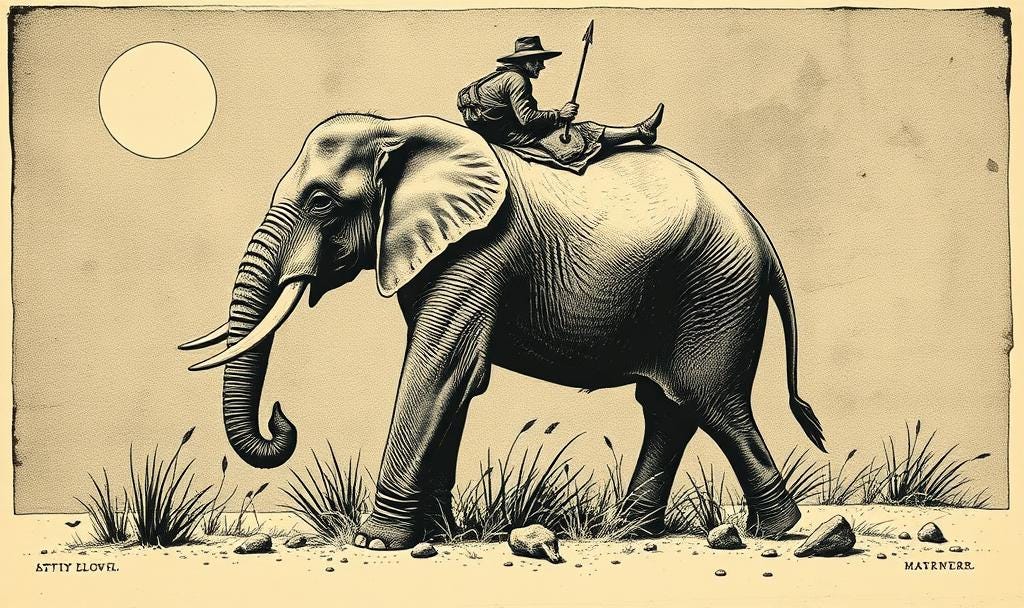
Plato called it a chariot pulled by two horses: one noble (reason), one wild (passion). Jonathan Haidt modernized it as the Elephant and Rider: the Rider (logic) thinks they’re steering, but the Elephant (emotion) decides where to go. We’ve been having this debate since Socrates, yet here we are-still prioritizing spreadsheets over songs, productivity over wonder.
My grandmother with vascular dementia? She’s proof the Elephant outlasts the Rider. Her rational mind may falter, but her emotional core-the part that lights up to Frank Sinatra or recoils at a sour note-remains stubbornly intact.
Why This Isn’t New (And Why That’s the Problem)
Freud split the mind into id, ego, superego. Buddha preached balancing wisdom and compassion. Aura Sofia and Elaine mapped our Mental, Emotional, and Behavioral selves. We’ve always known integration is key, but have failed to prioritize and institutionalize this knowledge.
The cost? My grandmother’s generation medicates dementia; mine numbs with burnout. We’re forgetting that memory and knowledge isn’t just facts - it’s the smell of rain, the ache of a first heartbreak, the rhythm of a childhood lullaby.
The “Wise Mind” Prescription
Dialectical Behavior Therapy (DBT) offers a clue: Wise Mind, where logic and emotion collaborate. It’s not complicated:
Talk to your Elephant: Dance to a song that hurts. Write a letter you’ll never send.
Trust your Rider: Learn one new fact daily-then connect it to a feeling (Why does Fibonacci’s sequence feel like music?).
Walk the Bridge: Cook a recipe that scares you. Take a “wrong turn” walk.
These aren’t hacks-they’re lifelines. Every time you dismiss emotion as “illogical,” you starve half your mind. Every time you ignore logic as “cold,” you blind yourself to patterns that could protect you.
The Urgency of Small Rebellions
My fading grandmother’s intact memories aren’t grocery lists or formulas or passwords - they’re emotional imprints: her first kiss, the sting of lost love, the thrill of salsa dancing. They endure because they engage all three faces of her mind.
The clock is ticking for the rest of us. Dementia rates are rising. Burnout is endemic. Yet we’re still arguing about “left vs. right brain” as if we’re not whole beings. Here’s your call to arms:
Today: Listen to a song that used to make you cry. Let it hurt.
This week: Learn one irrational skill (whistling, flower arranging, bad karaoke).
This year: Replace “self-care” with self-remembering-not just what you did, but how it felt.
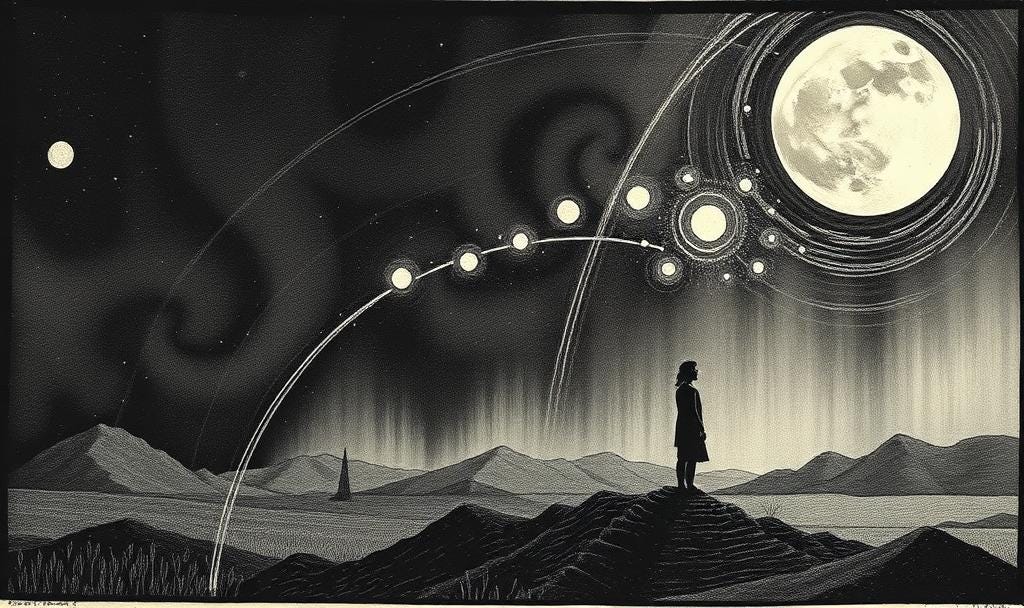
“I wonder as I wander, at the wonders of the world.”
(Elaine De Beauport Inspired by John Jacob Niles, 1933)
Further Reading:
The Three Faces of Mind by Aura Sofia Diaz & Elaine de Beauport
Designing Your Life by Dave Evans (for tactical wonder-building)
The Happiness Hypothesis by Jonathan Haidt (Elephant/Rider deep dive)
fire dude