
Patronage, Commodification, and the Search for True Artists
Reflections from an enthused enthusiast

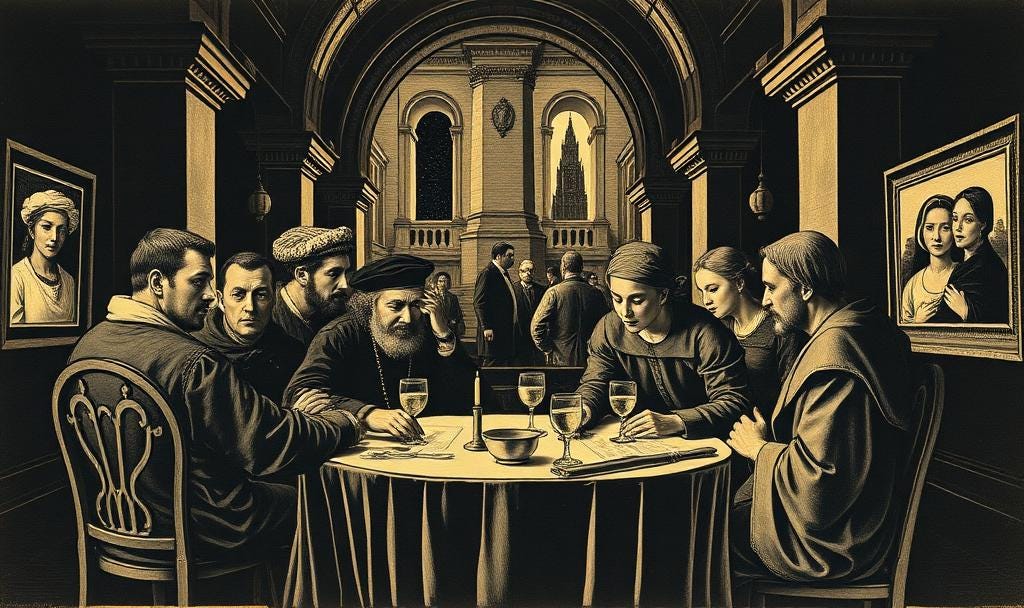
After five years working alongside artists in NYC, I’ve seen firsthand the paradoxes of the modern art world. The city pulses with creative ambition, yet for many, the struggle isn’t just to make art - it’s to survive as an artist. The landscape is crowded, noisy, and hyper-competitive. Sometimes, it feels like everyone is an artist, or at least wants to be. But finding those rare individuals who create because they must-who treat art as oxygen, not just occupation-is as difficult as ever.
The Arc of Patronage: From Genius to Product
Centuries ago, the path was clearer, if narrower. The Renaissance masters-Michelangelo, Leonardo, Artemisia Gentileschi - were sustained by the patronage of the Medicis, the Church, and the aristocracy. Their benefactors, for all their flaws and biases, recognized something transcendent in these artists. Patronage wasn’t just about money; it was about belief in genius, in talent that could elevate a city, a family, or a faith. Artists were rare, and their work was precious.
But patronage was also exclusionary. Women and artists of color were almost always left out, their creative potential stifled by social and institutional barriers. The gatekeepers were few, and their tastes shaped history.
The Market Arrives: Art as Commodity
Fast forward to today, and the market has replaced the Medici. Art is everywhere-on Instagram, in pop-ups, on the blockchain and everyones favorite: made by AI. The barriers to entry have fallen, but so has the sense of curation. Now, artists are entrepreneurs, hustling for grants, commissions, and likes. The art world has become a marketplace, and artists are expected to be brands.
This democratization has its virtues. More voices, more perspectives, more access. But it also breeds over-saturation. The pressure to productize-to make art that sells, that trends, that fits into a feed-can drown out the quieter, riskier, more honest impulses that drive true creativity. The existential artist, the one who creates because they have no choice, can get lost in the noise.
Modern Patronage: New Forms, Old Questions
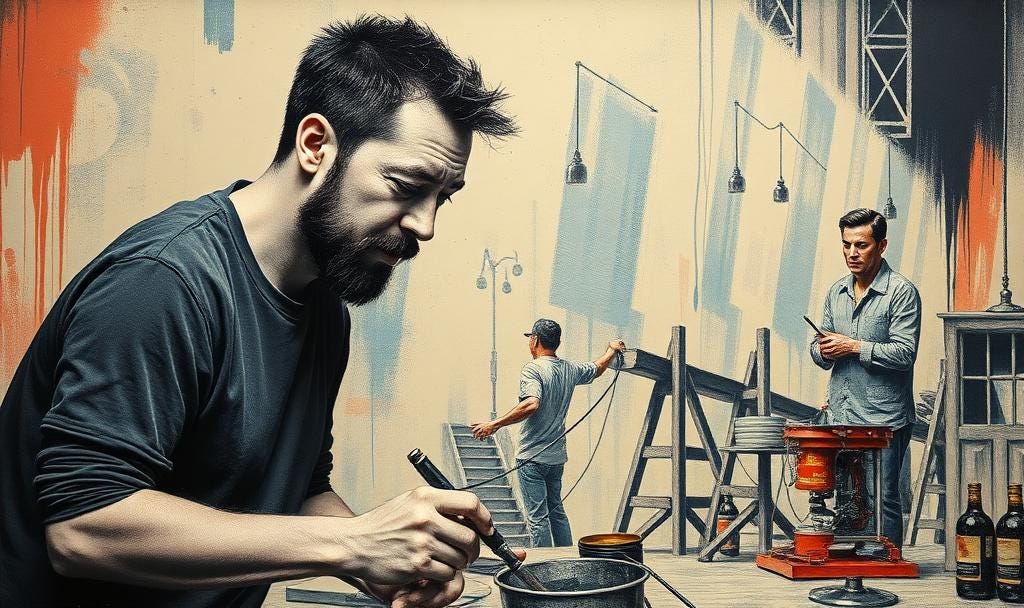
Yet patronage hasn’t disappeared; it’s evolved. Today’s patrons are venture capitalists, private equity firms, and corporate sponsors. Sometimes, they back entire creative industries-music, gaming, digital art. Sometimes, they support individual artists in unexpected ways.
Take David Choe, who painted Facebook’s offices in exchange for stock - a gamble that made him a multimillionaire. Or the rise of platforms like Patreon, where artists can attract micro-patrons from around the world. These stories are seductive, but they’re exceptions. For every Choe, there are thousands of artists grinding away, hoping for a break that may never come.
The new patrons can be more inclusive, more self-aware. But they can also be just as fickle, just as driven by trends and returns as the market they inhabit.
The Search for the Real Thing
In my time in New York, I’ve met artists who live for the work - who would make art in a vacuum, with no audience, no Instagram, no promise of reward. Their studios are sanctuaries. Their work is often raw, unpolished, and deeply personal. They are, in a sense, outsiders in their own industry.
On the flip side, it is too easy to get swept up in the machinery of commodification. The temptation to chase what sells, to cater to the algorithm, is real. The line between creator and product is thinner than ever.
A true artist can seldom survive without patronage, but how are the patrons to find them when they are slow to conform to the algorithm.
What Comes Next?
As we look to the future, the question isn’t just who will pay for art, but what kind of art we’ll value. Will we continue to reward the loudest, the most marketable, the most easily packaged? Or will we find ways to support the existential artists - the ones who create because they must, not because they can? The ones who spend all of their time on the craft and not on building a brand.
Perhaps the answer lies in a new kind of patronage: one that is empathetic, intentional, and willing to look past the noise. One that values process over product, risk over repetition, and honesty over nonsense.
Because in the end, art’s true power comes not from its price tag, but from its ability to reveal something essential about what it means to be alive.
Sources & Further Reading
Facebook graffiti artist David Choe, from homeless to millions | CBS News
Breaking Barriers: Women Artists Who Transformed the Art World
Powered by Mavericklm.ai